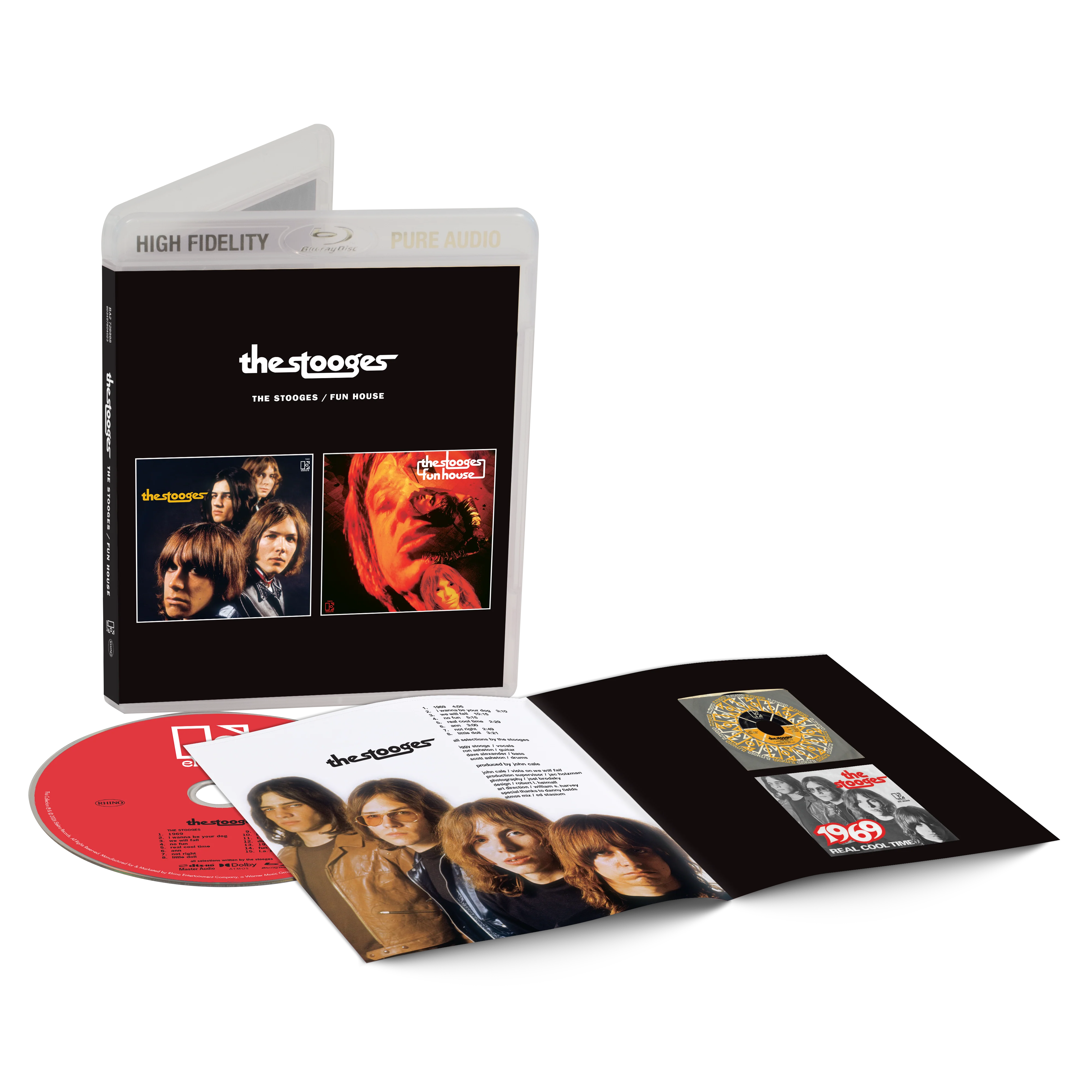
The Stooges/Fun House (Atmos)(Blu-ray)
Features Dolby Atmos Mixed From The Original Multi-Track Tapes & New Hi-Res Stereo Mixes By Ed Stasium
THE STOOGES
The Stooges unleashed their groundbreaking debut on August 5, 1969, and they unassumingly ignited a revolution. Led by inimitable frontman Iggy Pop, it spawned classics such as “I Wanna Be Your Dog” and “1969.” The latter notably graced Rolling Stone’s “100 Greatest Guitar Songs,” while the record also claimed a spot on Rolling Stone’s “500 Greatest Albums of All Time.” Retrospectively, Pitchfork hailed it as “raw and immediate and dripping with an aggression that's rarely been rivaled.” It also reached #106 on the Billboard 200.
FUN HOUSE
Recorded in Los Angeles with producer Don Gallucci, Fun House arrived in 1970 as The Stooges—Iggy Pop, Ron Asheton, Dave Alexander, and Scott Asheton—doubled down on everything that made their debut a year earlier so confrontational. It was a deliberate escalation—testing how far the music could be pushed without coming apart.
Original: $24.98
-65%$24.98
$8.74Product Information
Product Information
Shipping & Returns
Shipping & Returns
Description
Features Dolby Atmos Mixed From The Original Multi-Track Tapes & New Hi-Res Stereo Mixes By Ed Stasium
THE STOOGES
The Stooges unleashed their groundbreaking debut on August 5, 1969, and they unassumingly ignited a revolution. Led by inimitable frontman Iggy Pop, it spawned classics such as “I Wanna Be Your Dog” and “1969.” The latter notably graced Rolling Stone’s “100 Greatest Guitar Songs,” while the record also claimed a spot on Rolling Stone’s “500 Greatest Albums of All Time.” Retrospectively, Pitchfork hailed it as “raw and immediate and dripping with an aggression that's rarely been rivaled.” It also reached #106 on the Billboard 200.
FUN HOUSE
Recorded in Los Angeles with producer Don Gallucci, Fun House arrived in 1970 as The Stooges—Iggy Pop, Ron Asheton, Dave Alexander, and Scott Asheton—doubled down on everything that made their debut a year earlier so confrontational. It was a deliberate escalation—testing how far the music could be pushed without coming apart.